






Customer line 9 am - 6 pm: +420 774 590 258 | Do you need help?
| Price in e-shop with VAT: | 282,38 € |
| Temporarily unavailable | |
|
|
Send a question
on availability |
|
Send a question
on availability |
|
|
35 years in business = safe shopping and professional service |
|
Don't know how to choose? Are some parameters not clear to you? Write us your question and we will contact you with an answer.
#Chcete dostat upozornění ve chvíli, kdy produkt bude k dispozici? Stačí vyplnit formulář a náš hlídací pes Vám dá vědět.
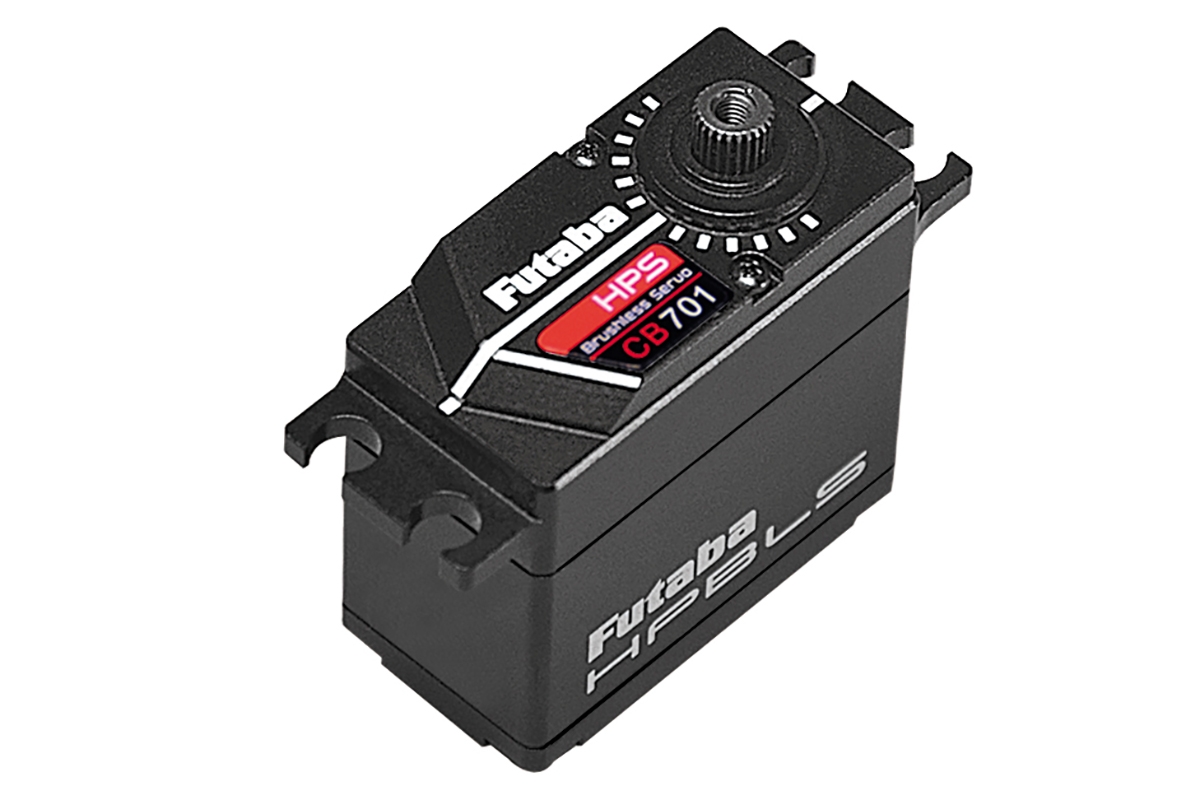
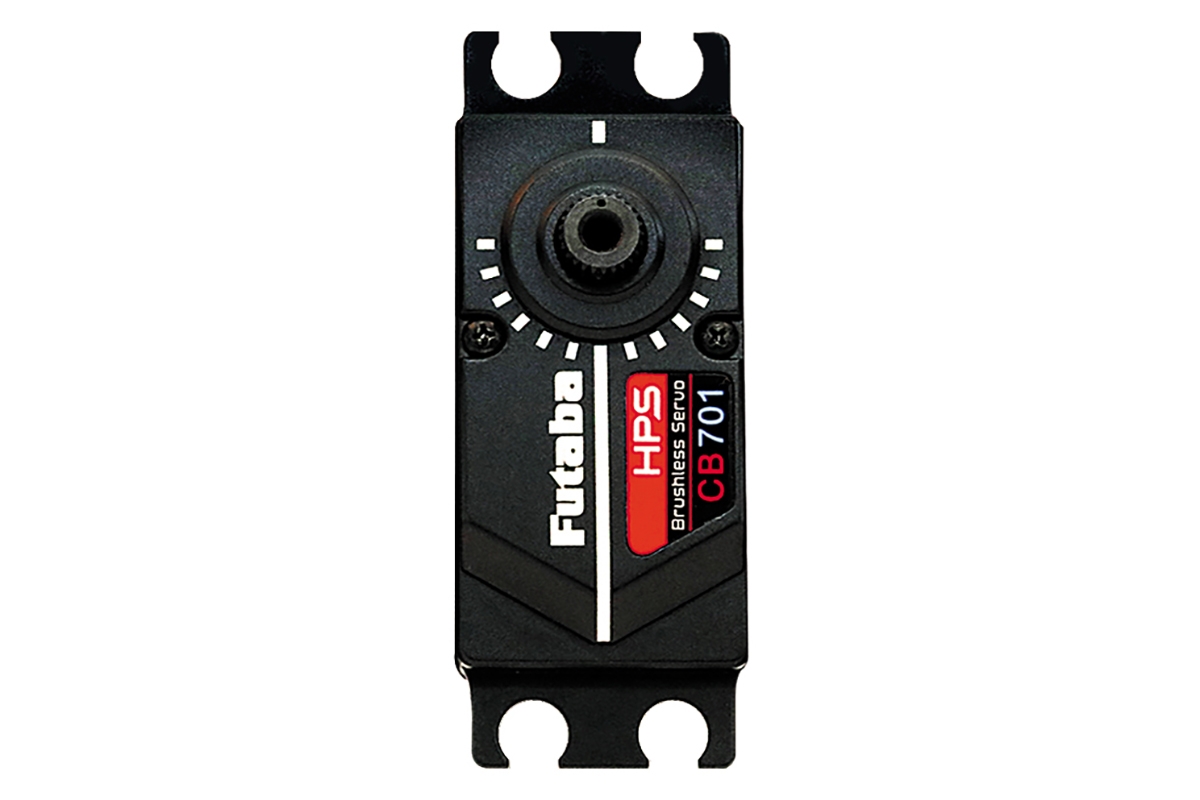
An extremely powerful and very fast programmable digital standard S.BUS2/S.BUS servo with a brushless motor, metal gears and an output shaft supported by two ball bearings, featuring increased operating voltage for top-level 1:8 off-road racing cars. It is housed in an all-metal case to ensure effective cooling and high mechanical strength. When used with T7PX/T7PXR/T7XC/T10PX RC systems and R334SBS/R334SBS-E receivers, it can be switched to SR mode to use the super-fast T-FHSS SR (Super Response) transmission system; when used with a T10PX RC system and R404SB/R404SB-E receivers, it can use the ultra-fast F4-G transmission system (UR – Ultra Response servo mode).
Using a brushless motor provides:
The HPS-CB701 can be connected to the S.BUS 2 outputs (serial bus with two-way communication) or S.BUS outputs (serial bus with one-way communication) of receivers for surface models, or it can operate as a conventional servo connected to a receiver channel (PWM) output. The HPS-CB701 cannot be used with receivers for Futaba Air RC systems.
Using the CIU-3 USB interface and the S-Link PC software, or a Futaba transmitter equipped with an S.BUS servo setting function, you can program a range of servo parameters (speed, travel, neutral, overload protection, soft start, etc.). Switching to SR mode (types 1 to 3) is only possible with a T7PX/T7PXR/T7XC transmitter; switching to UR mode is only possible with a T10PX transmitter.
Increased operating voltage: 6.0–7.4 V (nominal).
What is S.BUS2/S.BUS
Unlike conventional RC systems, the S.BUS(2) system uses serial data communication to transmit control signals from the receiver to servos, gyros or other devices. This data contains commands such as “move the channel 3 servo to 15 degrees, move the channel 5 servo to 30 degrees” for multiple devices. S.BUS(2) devices execute only the commands corresponding to their own assigned channel. For this reason, several servos can be connected to the same signal cable while still being set up and controlled individually as needed. This is done using the servo identification code (ID). The ID can be found on the label on the servo box.
An S.BUS2 servo can be connected to both S.BUS2 and S.BUS receiver ports. Its operation is determined by the channel setting stored in the servo (set using the programming interface of a Futaba transmitter, an SBC-1 programmer or the CIU-3 USB interface with the S-Link PC software).
An S.BUS2 servo connected to a channel output of a conventional receiver (PWM) operates as a conventional servo. Its movement is determined by the signal on the receiver channel to which it is connected. The servo’s programmable function settings remain in effect.
| Servo size | Standard |
| Servo type | Digital |
| Torque at 6.0 V [kg/cm] | 42 |
| Torque at 7.4 V [kg/cm] | 49 |
| Speed at 6.0 V [s/60°] | 0.09 |
| Speed at 7.4 V [s/60°] | 0.075 |
| Servo gears | Metal |
| Ball bearings | 2× |
| Highvoltage | Yes |
| Operating voltage [V] | 5 - 8.4 |
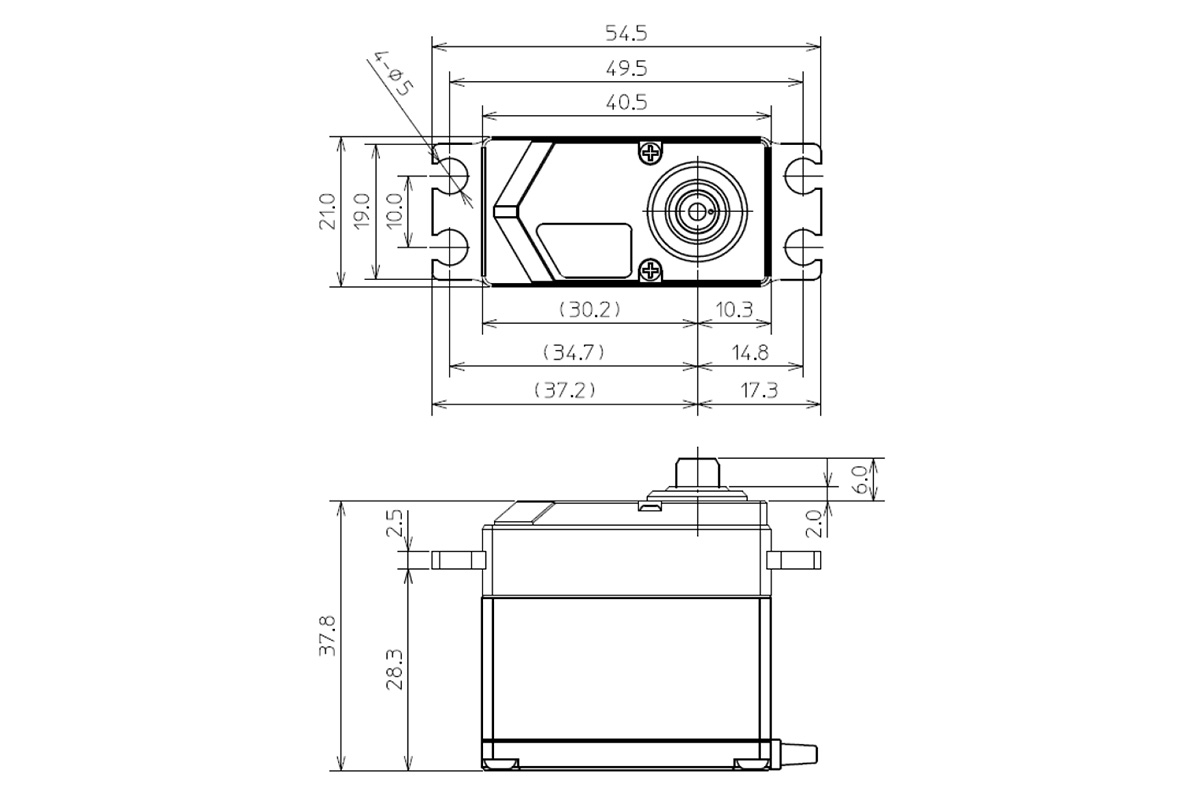
| Length [mm] | 40.5 |
| Width [mm] | 21 |
| Height [mm] | 39 |
| Weight [g] | 75 |
| Suitable for | On-road cars, Off-road cars, Boats |
| S.BUS | Yes |
| S.BUS2 | Yes |
| Water resistance | Splash-resistant |
| SR mode | Yes, with T7PX/T7PXR/T7XC and R334SBS(-E) |
16 items


This website is using cookies
In order to improve our services, we use cookies on this website. For more information go to Terms and conditions for use of website.